Section 38 of 80 · Print pages 155–160
Ten Tips for Critiquing a Dead Medium

If the Reformed Church functionary won’t hazard a guess at Homeless Healthcare of Los Angeles’ wait list, then writhe grateful as possible into the lounge area to watch TV with the other derelicts.
One: If the lead judge of Singing Competition, recently celebrated in the culture for his decision to become a construction of a topical narrative, intones in response to a rendition of Scott Walker’s Farmer in the City: “Absolutely! Amazing!” then nod at Donna as she shrieks, “That the devil. Faithless and perverse generation. You know not what manner of spirit you’re of. Foxes got holes, birds in the air got nests, but son of man got nowhere to lay his head. That there the devil. ”
Two: If uncertain whether Donna means the construction of a topical narrative is the devil, or the televisual medium’s scavenging of truly holy and truly strange songs as mere competitional fodder is the devil’s work—gurgle sounds of generic agreement. If cable-fond Merle, a hippie and academician, discourages you from “encouraging” Donna, tell Merle that his entitlement to stridency expired around 1981.
Three: If Donna the Derelict spits in your mouth while shouting, “Talkin’ Ninetto, Ostia, Vigo. Talkin’ wrinklin’ wrinklin’ against the sky. Talkin’ brain grass and remember that dream. Serpents and scorpions and all the power of the enemy. You know he that despiseth you despiseth me and nothing by any means shall hurt you, ” then respond, “Listen Donna, I want that to be true. ”

Four: If the proceeding local news breezily highlights all manner of strife and tragedy, murder and malice, civic perfidy, state perfidy, federal perfidy, local head-stompings, out-of-state electrocutions, the bright smiles of anchors contrasted against the bleeding maws of the carjacked, and if wheelchair-bound like Donna and semi-tongueless and without many entertainment options—then comprise that last remaining demographic television relies upon: the immobile.
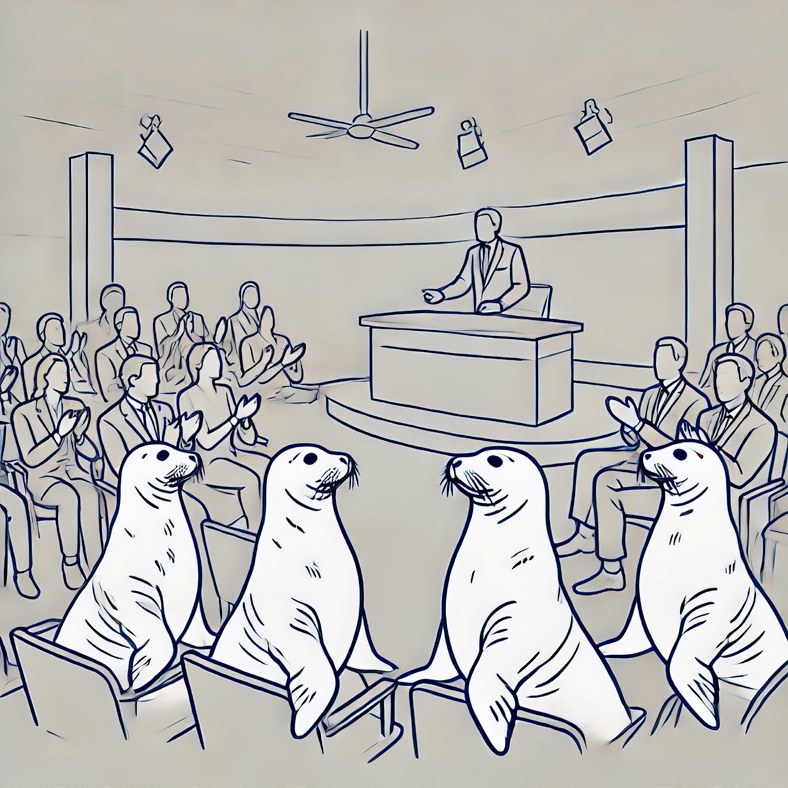
Five: Watch The Colbert Report following the local news. Fear a Late Night Culture Industry audience more frothing than anything Elia Kazan could imagine, as though the least transgressive wink by this progressively-leaning and -preening Lonesome Rhodes were a communion wafer ground into Bud Light Watermelon.
Six: As the secular service continues, hear Bud Light Watermelon (Colbert) deride anti-environmental legislators while his carbon-drunk West 53 rd street tourists genuflect accordingly. If NT Wright’s Evil and the Justice of God is laid out conveniently on the ottoman before you, read its innermost essence to Donna, postmodernity’s analysis of evil allows for no redemption. There is no way out, no chance of repentance and restoration, no way back to the solid ground of truth from the quicksands of deconstruction. Postmodernity may be correct to say that evil is real, powerful and important, but it gives us no real clue as to what we should do about it. It is therefore vital that we look elsewhere, and broaden the categories of the problem from the shallow modernist puzzles on the one hand and the nihilistic deconstructive analyses on the other.
Seven: If Merle responds, “Having been something of big wheel in the Yale poststructuralist scene of the early 80s, I know a thing or two about the postmodern, ” really stressing the 'dern, ' then let him involute and obfuscate Wright’s certainty throughout the commercial break’s “artificial effervescence of signs. ”64
Eight: Watch Bud Light Watermelon cozy up to Penny Lane, the director of a Michael Moorean nod to consensus thinking titled Hail Satan that portrays Satanists as noble activists fighting the scourge of looming theocracy rather than the selfrighteous dinks they’re appropriately perceived as. Inquire of Donna when last a United States theocracy was even a remote possibility? Suggest optimistically that maybe it was August 7, 1963, when Bob Dylan recorded With God on Our Side. 64 (Baudrillard, 1994)
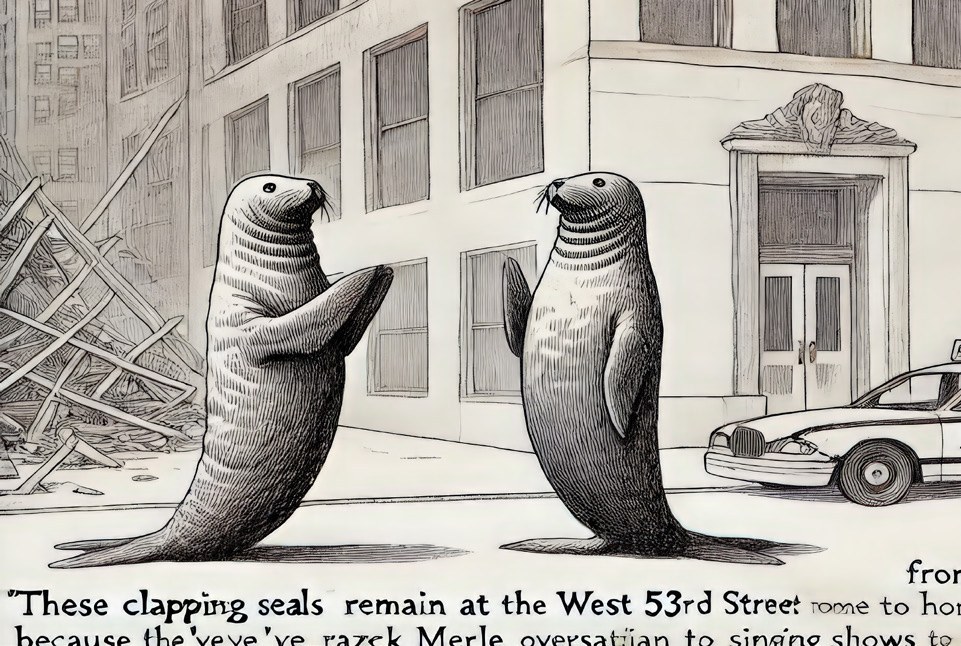
Nine: Concede to Merle the Yale man that yes regressive evangelicals eager of eschatological doom still impose illiberal abortionary policies, but in terms of the culture, in terms of Colbert’s nightly sermons, the battle for social currency ended decades ago. Opine to Merle that, “These clapping seals remain at the West 53 rd Street front lines because they’ve razed the home they had to return to. Heck Merle, they’ve even lost Singing Shows to an untenable oversaturation of the self-reflexive irony market. And here we find ourselves where the only non-quotidian bid for unsaturated meaning is to Hail Satan.” As the victim or beneficiary of a hyperstitious feedback loop, quote from, Templexity: Disordered Loops through Shanghai Time, which you have not read or even yet heard of, As [a] culture folds back upon itself, it proliferates self-referential models of a cybernetic type, attentive to feedback-sensitive self-stimulating or auto-catalytic systems. The greater the progressive impetus, the more insistently cyclicity returns. To accelerate beyond light-speed is to reverse the direction of time. Eventually, in science fiction, modernity completes its process of theological revisionism, by rediscovering eschatological culmination in the time-loop. Ask if Merle has heard of Friedrich Nietzsche, and to what impoverished extent he’s reconciled the eternal recurrence of the same with the Death of God. Bust out this chestnut polished for just such a confrontation, “To comprehend the Death of God’s impact upon the men of his day, imagine awakening one morning to find no one believed in capitalism anymore. It’s not that they no longer believe in its merits or sustainability as you’ve ceased to believe, Merle. It’s that by having come to believe its existence unnecessary, in their minds, not only does capitalism no longer exist, but it never existed in the first place. Yet the factories making utterlyunbelieved-in fitted FUBU hats must continue making hats for us and by us until the standing reserves run dry. What would you do with all Capital’s monuments, Merle? Would you raze the factories? What would you build in their place? How would surplus value be squandered? How would needs for commerce be met? And if people continued to trade, would you have them do so in secret?
Ten: To tune out iniquitous ironies, winking and feigned virtue alike, and the tawdriness of clickbait parading as societal concern, exit the Late Night critical theory/comedy space by turning off Colbert and checking your Google Scholar alerts for incidences of the “autostereogrammatic” instead, begetting a hissy fit from Merle, whose field yielded income incommensurate to owning a phone. If Merle sneers and says, “Can people not be fundamentally good WHILE clapping like seals? Are all the inequities of equity solved? Aren’t we both here in a shelter—you, a celebrated small press author; I, a contemporary of Jonathan Culler—because of inconceivable wealth disparity? Who made you the arbiter of progressivism’s progress? Couldn’t these watermelon wafers come from a place of genuine empathy?” Yawn theatrically before responding, “The wafers come from a place of commerce, Merle. It’s not inequality they want reconciled, but Viacom’s dying profit model. ” If then wearying of Merle’s hammer punches to your neck and upper vertebrae, realize midnight mass will soon commence and wheel yourself towards the pulpit.